


This blog, written by the GCCS's Rachael Owens and Lynne Cairns, reflects and reports on the scoping phase of the research project From Capacity to Context
From Capacity to Context is a research project focused on changing how parents experience the child welfare system, particularly at two critical points: when parents are adolescents themselves, and when they are parenting adolescents. The project title asks a simple but challenging question: what might change if safeguarding services understood and worked with the context of parents’ lives, rather than judging parenting capacity in isolation? Our vision is to extend the cultural changes taking place within the ROTH (Risk Outside the Home) pathway - where parents are being positioned as partners - to all parents.
Core features of the project are partnership, collaboration and careful listening. We are working alongside parents, practitioners and organisations in Leeds and Plymouth, as well as the Ivison Trust, to build trusting and long-term relationships that create space for honest learning. Through interviews, observations, case file reviews and creative group work, parents have shared often painful experiences of how safeguarding systems respond to them. Practitioners have reflected on the tensions they face when trying to work relationally within these risk-focused systems. By bringing parents and practitioners together as co-researchers, we are collectively imagining and testing new ways of working.
What’s the problem?
These conversations have revealed cultural and systemic barriers that make collaboration difficult—but also opportunities for change. Our scoping work has highlighted a shared concern from parents and practitioners alike: safeguarding systems often struggle to work with parents as partners. Parents told us they feel unseen and misunderstood by services that are poorly equipped to respond to different life stages—particularly adolescence. Systems can feel opaque, confusing and unfair, while the complexity of parents’ lives is flattened into assessments that focus narrowly on “parenting capacity”.
These conversations revealed the emotional impact of navigating fragmented services, everyday nightmares of living within extra-familial harm and the cumulative traumas families experience. Parent researchers illustrated their reflections with striking metaphors, like the one who articulated the haunting realities of living through faceless exploiters who terrorise adolescents and their families as like living with ‘ghosts’. Another, movingly reflected on the cliff edges of turning eighteen, being pulled into adult systems, without any support around the fact that when children turn 18 they are ‘baby adults’ – newborns of the adult world – yet they those impacted by extra-familial harm are given no grace or support to navigate these adult worlds.
Parents described how this deficit-focused lens overlooks their resilience, insight and expertise. Many felt patronised or judged, rather than supported. Practitioners, meanwhile, spoke about overstretched services, lacking frameworks to respond to the specific needs of adolescent parents or parents of adolescents. This often results in an unhelpful swing between prioritising the needs of children or parents - even though in practice these are inseparable. Both young parents and young people experiencing extra-familial harm can become adultified, while the wider social and structural harms shaping family life remain unaddressed.
Despite the distressing and challenging nature of this material, parent and practitioner researchers have formed strong and trusting relationships, finding shared hope in the difference they could make for other parents who might find themselves in their shoes. We have witnessed co-researchers’ deeply listening to one another, with sensitivity and empathy. Despite broken trust and painful histories, parents expressed respect for practitioners and a desire to work together for change. This was particularly evident when parent researchers from across the projects presented at the launch of the GCCS launch conference.
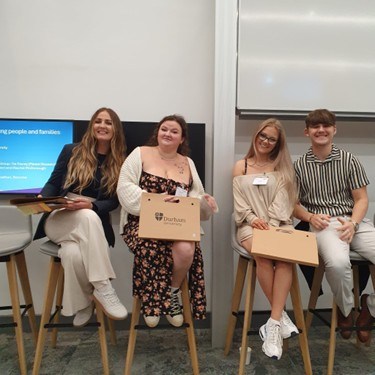
Through testimony, animation and spoken word, parent researchers demonstrated their strength and shared honestly about their traumatic and overwhelming experiences at the hands of welfare services. This made a big impact on the conference delegates – made up of practitioners, policy makers and VCS organisations – leading to thoughtful reflection, new relationships - and a standing ovation!
Context over capacity?
So, what have we learnt so far about working with the context of parents’ lives? It involves recognising structural inequalities and social harms that are often invisible in casework; offering parents the same opportunities afforded to others; and providing respectful, rights-based support where parents’ expertise and needs are held together, not set in opposition.
Our work with young parents illustrates this clearly. Young parents spoke about personal growth and resilience, alongside rapid transitions, disrupted relationships, discrimination and social isolation. They often lose their rights as young people without gaining recognition as adults with the burden of higher expectations and scrutiny compounding these harms.
When invited to “dream” a different future, young parents and practitioners called for welcoming universal services, dignity and respect, stronger peer networks, better training for professionals, and new public narratives that celebrate young parents’ strengths. Likewise, parents of teenagers and practitioners dreamed of systems that stop scapegoating parents, practices that respond to trauma and partnerships that value parents’ knowledge and lived realities.
What’s next?
Our focus now is on developing practical approaches, resources and a new practice framework that supports more equitable, partnership-based relationships with parents, and ultimately improve safeguarding responses for families. Building on these ideas, we have now developed pilots in Leeds and Plymouth which we hope will help bring about the cultural change that is needed.
Our piloting work around parents of adolescence will focus on:
- creating safe spaces for parents to participate as partners in safeguarding plans;
- work with practitioners to develop relational, trauma-informed practices; and
- bring in strategic professionals to examine systemic dynamics and foster multi-agency collaboration.
Meanwhile our pilots around young parents will:
- develop a new training course for professionals working with adolescents;
- create a suite of creative public outputs to shift attitudes about young parents; and
- explore the potential for a buddying system for new young parents supported by those with more experience.
We are well underway with these tasks and will have more to report in later in the year. We will launch new findings and resources to support the wider sector in early 2027. Our goal is simple but ambitious: to create safeguarding practices together that respect parents, acknowledge complexity and work collectively to change harmful contexts. This is not just about improving processes: it’s about building trust, equity, and shared responsibility for safety.
To find out more about the progress being made, read our January 2026 Interim Report for this project here.